
The Great Barrier Reef
The largest living structure on Earth — 1,400 miles of coral visible from orbit, better from a snorkel mask, and reachable on a cruise port day if your itinerary is chosen right.
Reef Days That Deliver
First, the honesty clause: not every ‘Australia cruise’ reaches the reef — Sydney-to-Auckland runs never do. Queensland-coast itineraries calling at Cairns, Port Douglas, Airlie Beach, or Yorkeys Knob are the ticket. From there, high-speed catamarans run to permanent outer-reef pontoons where the day is a choose-your-adventure: marked snorkel lanes over coral gardens, intro dives with no certification needed, semi-submersible rides and underwater observatories for the dry-inclined, and helicopter loops over Heart Reef for the big-spenders.
The Excursion, Up Close

Outer Reef, All Abilities
Pontoon platforms moor on the outer reef — where visibility and coral health peak — and carry everything: wetsuits and stinger suits, buffet lunch, freshwater showers, kids’ zones, and marine biologists giving reef talks between swims. Snorkelers drift marked lanes; first-time divers get one-on-one instructors; grandparents watch it all through observatory glass with a flat white.
Season notes: October–May is stinger season (suits provided, not optional), and June–November overlaps whale migration — minke and humpback sightings from the catamaran are a bonus track.
- Snorkel lanes & intro dives — guided, gear included
- Semi-sub & observatory — the reef without the wet
- Heart Reef heli loop — the frame-worthy splurge
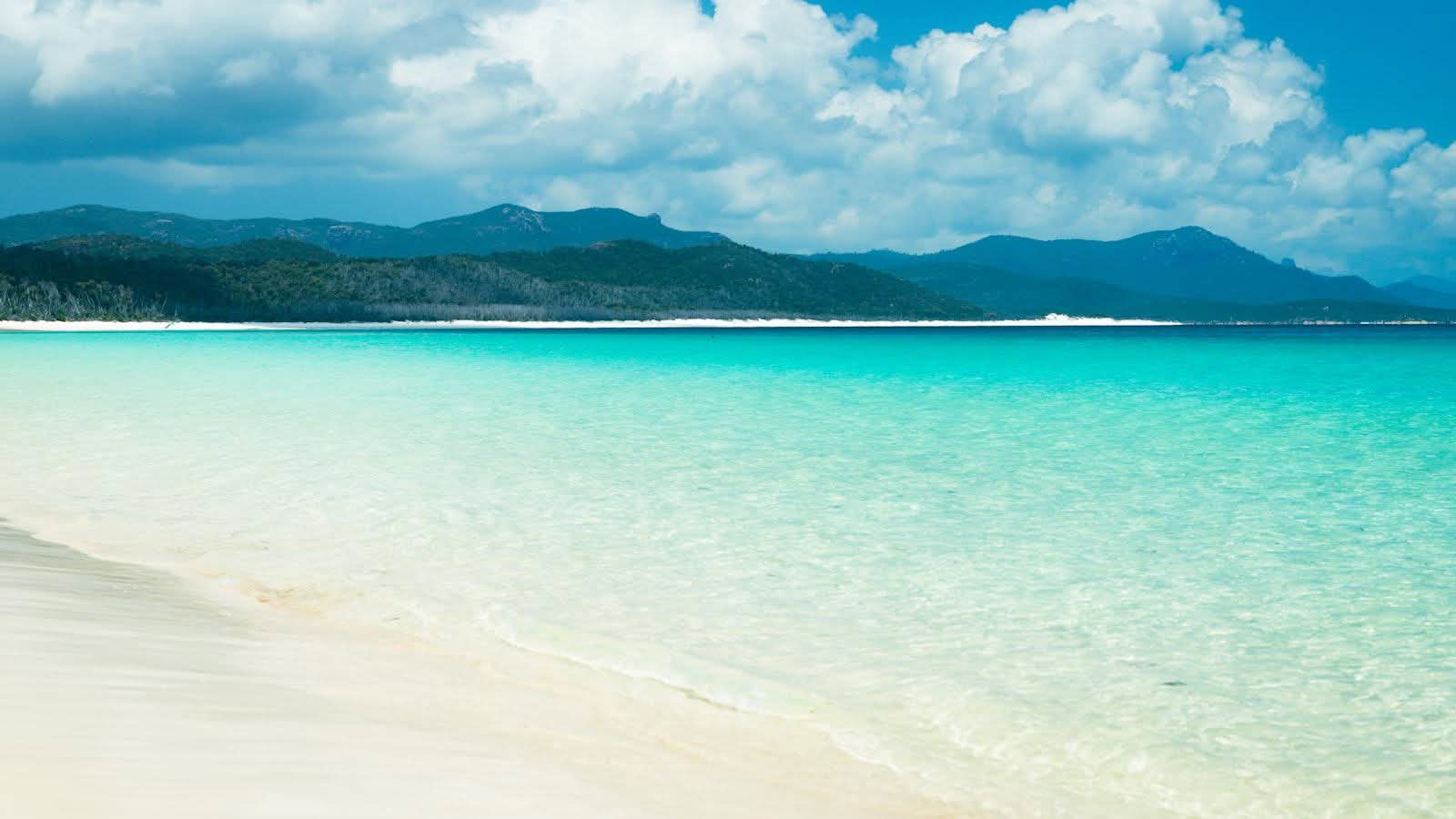
Whitehaven & the Whitsundays
Airlie Beach calls swap coral for the Whitsundays’ signature: Whitehaven Beach, four miles of 98% pure silica sand so fine it squeaks underfoot and stays cool at noon. Day boats pair the beach with the Hill Inlet lookout, where tide swirls sand and turquoise into patterns that look painted.
It’s the softest adventure on the itinerary — and the photo your group chat will crown.
- Whitehaven Beach day — the squeaky-sand legend
- Hill Inlet lookout — the swirl photo, earned by a short bush walk
- Reef-safe rules — mineral sunscreen only; suits do it better
You can see it from space.
Better to meet it face to face.
Questions We Get Asked
Which cruise itineraries actually visit the Great Barrier Reef?
Ones that sail the Queensland coast — calls at Cairns, Port Douglas, Airlie Beach, or Yorkeys Knob put the reef in day-trip range. The classic Sydney–Auckland runs never get close. If the reef is on your must list, say so first and we’ll build the itinerary around it — this is the single most common Australia-cruise planning mistake we prevent.
Can non-swimmers experience the reef?
Completely — the pontoons were designed for it. Semi-submersible rides cruise the coral walls, observatories sit below the waterline with café-adjacent viewing, and glass-bottom boats do lazy loops. The reef is genuinely an all-ages, all-abilities day.
Is the reef still worth seeing?
The outer-reef sites the operators access are protected, monitored, and still genuinely breathtaking — turtles, reef sharks, coral gardens in full color. Tourism operators here double as reef guardians and fund monitoring. Follow the rules (mineral sunscreen, hands to yourself) and you’ll leave an advocate.
Is there a reef environmental charge to pay?
Yes. Everyone visiting the Great Barrier Reef Marine Park on a commercial trip pays the Environmental Management Charge, set by the Reef Authority and used for reef management. Operators usually collect it with your booking, but not always — ask whether the quoted price includes it so you are not caught out when you board.
What is stinger season and does it affect reef trips?
Stinger season runs through the North Queensland summer, roughly November to May, when box jellyfish and Irukandji can be present in the water. Reef operators hand out full-body stinger suits during the season and you wear one to swim — that is the standard precaution. It is more of a concern on coastal beaches than out on the outer reef.
Can I see the reef without getting in the water?
Yes, and this is what the pontoon trips are built for. From a pontoon you can see the coral from a semi-submersible, a glass-bottom boat or an underwater observatory without swimming a stroke. It genuinely works — people who cannot or would rather not snorkel still come away having seen the reef properly.
Will I get seasick going out to the reef?
You might — the run out to the outer reef crosses open water and it can be choppy. Take something before you leave the ship, not once you feel it, sit low and mid-vessel, and stay out in the fresh air looking at the horizon. Once you are moored at the pontoon the motion settles considerably.
Is Whitehaven Beach near Cairns?
No — Whitehaven is in the Whitsundays, reached from Airlie Beach, while the Cairns reef trips go out to the outer reef pontoons. They are separate destinations on separate parts of the coast, so which one you get depends on where your ship calls. Whitehaven is a beach day famous for its silica sand; Cairns is a snorkel and coral day.
Let's Route You to the Reef
Tell us your sailing (or let us find you one) — your specialist books the cruise AND locks in excursions like this before they sell out. All free to you.
Our planning costs you nothing — the cruise lines pay our commission, so your fare is the same as booking direct. A quote is yours to keep.
Weekend Bahamas run or 30-night grand voyage — same care.
Family reunions, weddings at sea, milestone birthdays — we love a full table.
Cruise Interest Form
Boarding pass to better vacationsWe reply within one business day. Your info is never sold or shared.